
The Quick Rule of Thumb
As a general rule, harsh and mechanical-sounding noises (grinding, loud rattling) point to hardware wearing out or going out of alignment, while high-pitched or thin sounds (squealing) usually mean something just needs lubrication. The exception is popping — it can be completely harmless (wood expanding in cold weather) or a sign that a spring is about to fail, and you often can't tell which just by listening. Any sound that's new, getting louder, or paired with the door moving unevenly deserves a closer look rather than a guess.
Grinding
What it sounds like: a rough, metal-on-metal scraping noise, usually happening in rhythm with the door's movement, sometimes paired with the door hesitating or jerking.
Causes, in the order a technician checks them
- Worn or dry rollers. Nylon rollers crack and metal rollers flatten over years of use. A tech will spin each roller by hand to feel for roughness or play. Fix: replace the worn rollers, usually a handful at a time rather than the whole set unless the door is older.
- Opener drive gear. On chain and belt-drive openers, the plastic gear inside the motor housing wears down and starts stripping, producing a grinding sound right at the motor. Fix: gear and sprocket kit replacement, or a full opener swap if the unit is old.
- Track misalignment. If rollers are riding against the edge of a bent or separated track instead of rolling smoothly inside it, you'll hear grinding plus see the door scrape as it travels. Fix: realign or replace the track section; this is not a DIY fix because forcing a track back into place can snap it.
In homes with older tracks and original hardware — common in Chantilly's mix of older and newer construction — roller wear is the most frequent cause simply because the hardware has had more years of daily cycles.
Squealing
What it sounds like: a sharp, high-pitched squeak, often loudest right when the door starts moving and fading as it continues.
Causes, in the order a technician checks them
- Lack of lubrication. This is the first and most common check. Hinges, rollers, and the torsion spring itself dry out over time, especially after a dry summer followed by a sudden cold snap. Fix: a silicone-based garage door lubricant on hinges, rollers, and springs — not WD-40, which attracts dust and evaporates quickly.
- Worn hinge pivot points. If lubrication doesn't quiet the noise, the hinges themselves may be worn oval instead of round, letting metal rub against metal. Fix: hinge replacement, usually inexpensive and done in a single visit.
- Bent track pinching rollers. A track that's slightly bent inward can pinch rollers as they pass, producing a squeal rather than a grind if the contact is lighter. Fix: track adjustment or section replacement.
Squealing tends to show up more in winter here, when cold, dry air thickens old lubricant and tightens metal components slightly. A seasonal lubrication pass before the first hard freeze heads off a lot of these calls.
Popping
What it sounds like: a single sharp snap or bang, either during operation or when the door is sitting still.
Causes, in the order a technician checks them
- Temperature-driven material movement. Wooden garage doors and wood door frames expand and contract with temperature and humidity swings, and a sudden cold night after a mild day can produce a pop with no mechanical cause at all. No fix needed beyond confirming the door still operates smoothly.
- Loose hardware. Bolts on hinges, the track, or the opener rail loosen with vibration over time; when they shift slightly under tension, you get a pop. Fix: tightening to spec, checked as part of a maintenance visit.
- Spring under uneven tension. This is the one that matters most. A torsion spring that's winding or unwinding unevenly — or one that's close to failing — can make a popping or banging sound, sometimes followed by the door becoming noticeably heavier to lift. Fix: spring inspection and, if needed, spring replacement. Do not attempt this yourself; torsion springs are under high tension and a technician will use calibrated bars and proper safety procedure.
If the popping happens only on the first cold morning after a warm stretch and never again, it's very likely just the building settling. If it repeats every time the door runs, treat it as a spring or hardware issue and have it checked before the spring fails outright, which can happen without warning.
Rattling
What it sounds like: a loose, shaking noise throughout the door's travel, sometimes loud enough to hear from inside the house.
Causes, in the order a technician checks them
- Loose fasteners. Nuts and bolts on brackets, hinges, and the track work loose from thousands of open-close cycles. Fix: a full tightening pass, often resolves the issue completely.
- Worn rollers and roller brackets. Once play develops in the roller stem or bracket, every cycle produces a rattle. Fix: roller and bracket replacement.
- Opener chain or belt slack. A chain-drive opener with a loose chain will slap against the rail. Fix: chain tension adjustment, a quick fix during a routine opener check.
Heavy rain and coastal storm systems that roll through this area can also loosen exterior-mounted brackets over a season, so a rattle that starts after a stretch of bad weather is worth a hardware check even if the door still opens and closes fine.
When to Call Chantilly Garage Door
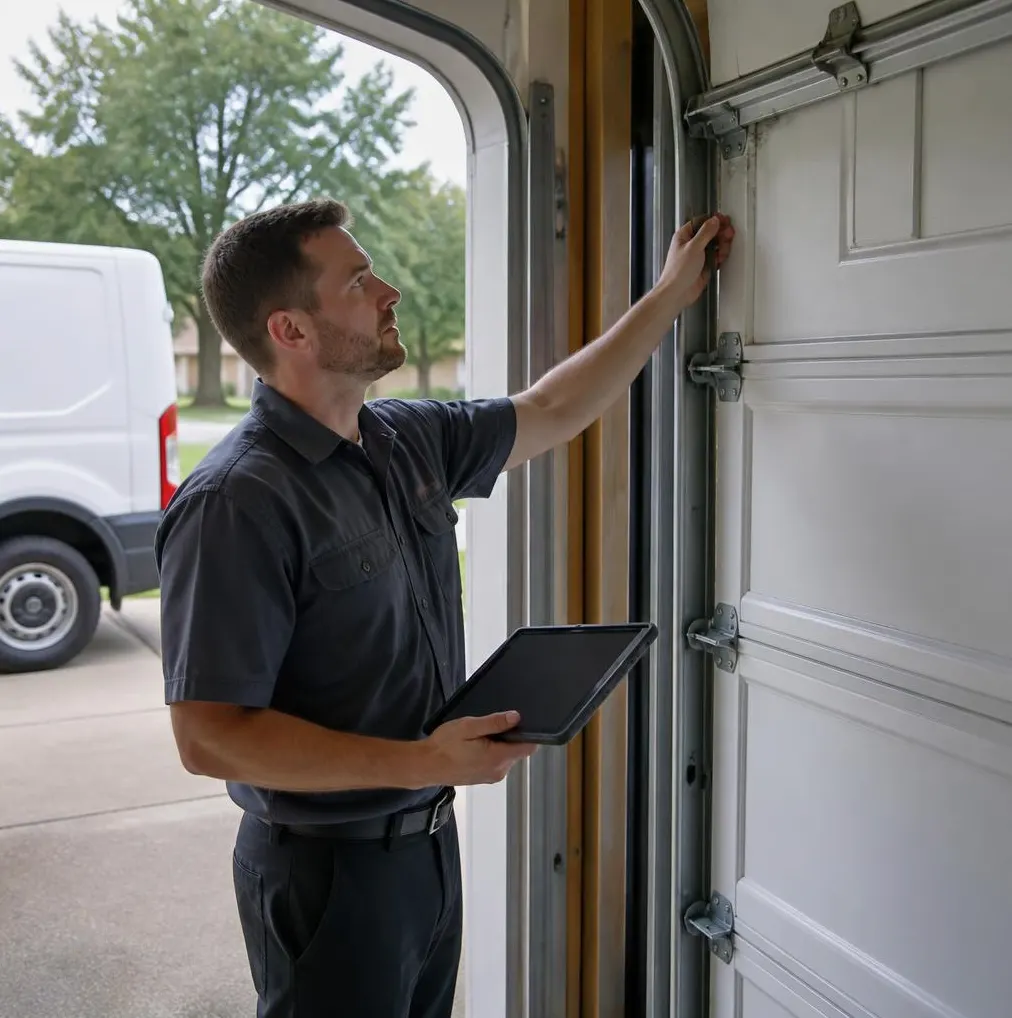
If lubrication doesn't quiet a squeal within a day or two, if a grinding noise comes with visible scraping on the track, or if you hear any popping that repeats on every cycle, it's time to call rather than keep guessing. Chantilly Garage Door handles diagnosis on-site, and for noises tied to springs or hardware, our Spring Replacement and Garage Door Maintenance services cover both the fix and a full inspection so you're not back to square one in a month. We also run Emergency Garage Door Service for doors that stop moving altogether, which sometimes follows right after a bad noise if it's ignored.
If your garage door in Chantilly, VA is making a noise that doesn't sound right, call Chantilly Garage Door and we'll come take a listen.